A Bridge, Not a Destination
Scripture Reading: Psalm 42.1–11
The psalmists never faked a smile. “Why are you in despair, O my soul? And why have you become disturbed within me?” (Psalm 42.5). Scripture leaves room for sorrow, and even for the songs that carry it. Ecclesiastes goes further: “Sorrow is better than laughter, for when a face is sad a heart may be happy” (Ecclesiastes 7.3). There is nothing unspiritual about a heavy heart—so long as it turns toward God rather than away from Him.
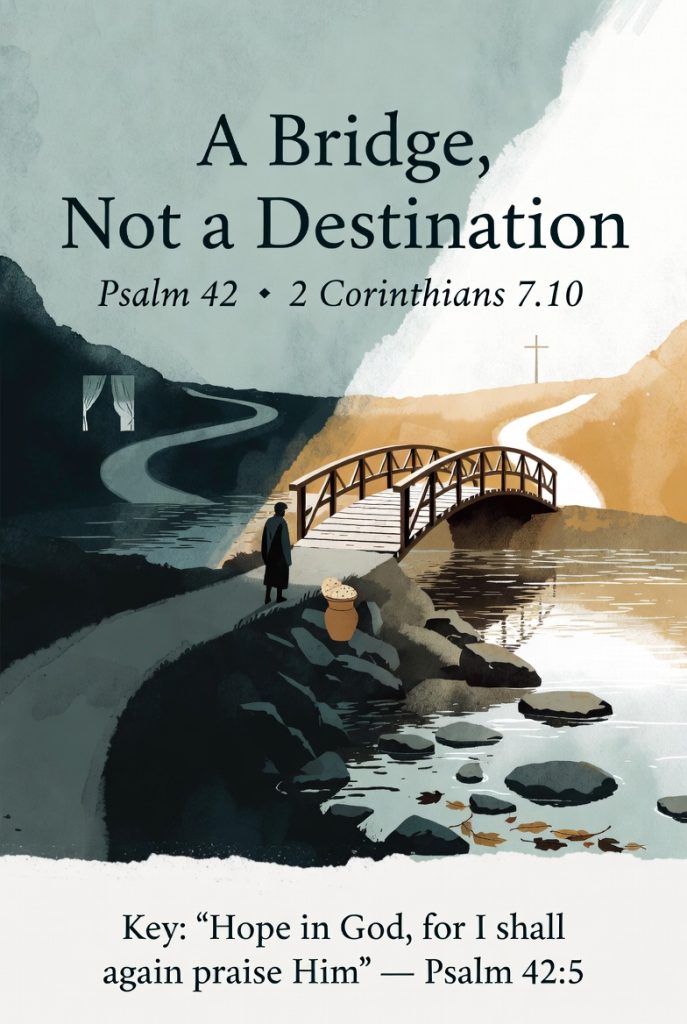
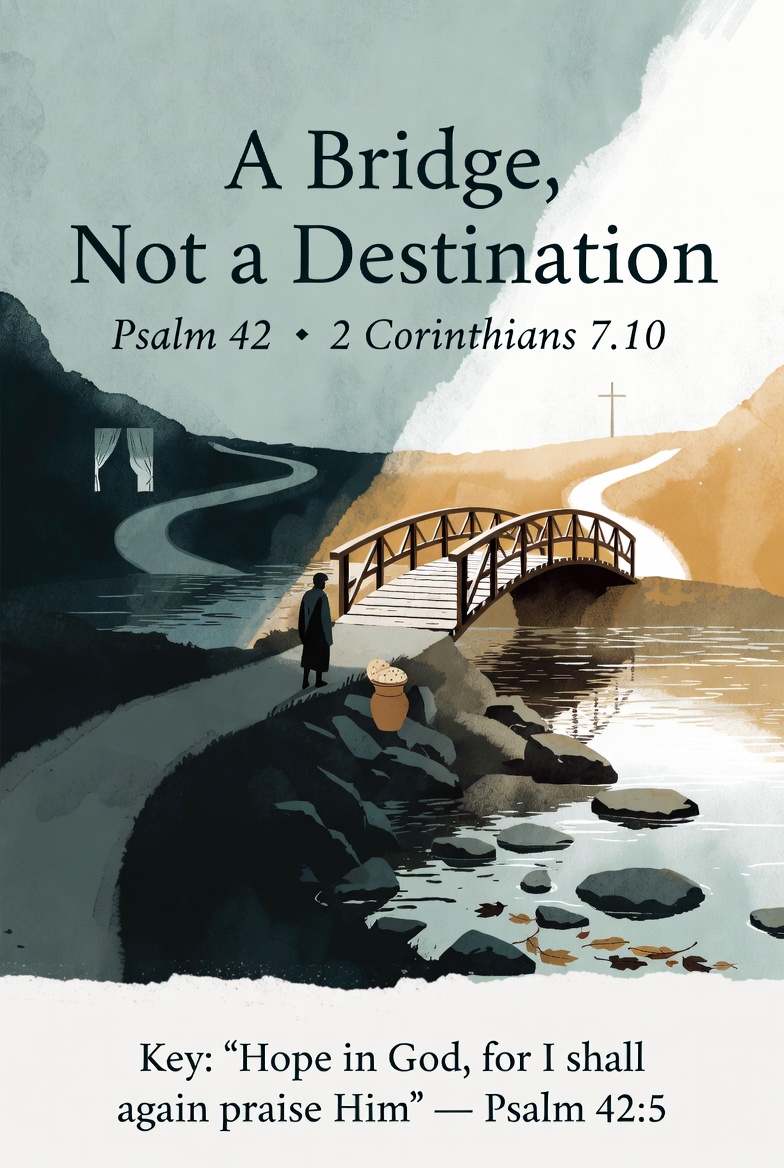
Use sadness as a bridge rather than a destination.
But sorrow forks. One path reflects; the other merely circles. Paul drew the line plainly: “The sorrow that is according to the will of God produces a repentance without regret, leading to salvation, but the sorrow of the world produces death” (2 Corinthians 7.10). Notice that every lament in the Psalms eventually pivots. Psalm 42 asks its aching question, then answers it: “Hope in God, for I shall again praise Him.” Godly grief moves. Worldly grief only sinks.
Elijah wanted to die under his juniper tree. God let him weep, let him sleep, fed him twice—and then said, “Go, return on your way” (1 Kings 19.15). The cure came wrapped in a task. So let the tears fall; then do the next small, faithful thing. Open the curtains. Make the call. Obey. The right question for our sad songs is not “Did this make me cry?” but “What did it leave me able to do afterward?”
Cross-references: Psalm 42.5, 11; Psalm 30.5; Ecclesiastes 7.2–4; 2 Corinthians 7.9–10; 1 Kings 19.4–15; Romans 12.15; Philippians 4.6–8.